Comic Home: A Whimsical Autumn Font That Stitches With Personality
First Impressions: Playful, Seasonal, and Instantly Recognizable
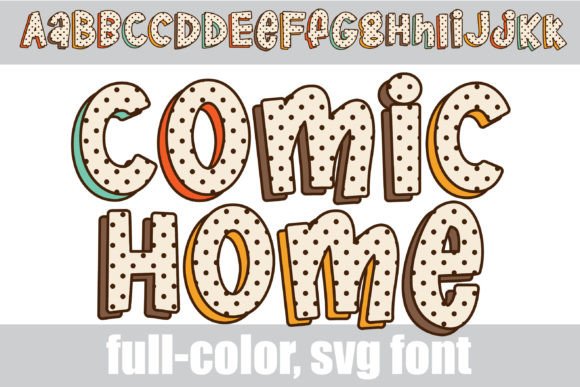
When I opened Comic Home for the first time, I smiled—then immediately pictured it stitched onto a linen tea towel for a local farm-to-table boutique. It’s not just a font; it’s a mood. The whimsical lettering leans into warmth and approachability, with bold black shadows that give it lift and dimension—like hand-drawn chalk on a cozy café chalkboard. The autumn color palette (think burnt orange, deep mustard, forest green, and warm cream) isn’t just decorative—it feels intentional, grounded, and seasonally resonant. And yes, those clever turkey glyphs? Typing > and < to generate two friendly turkeys is unexpectedly delightful—and surprisingly useful for holiday embroidery.
Real Project Test: Embroidering a Custom Tote Bag for a Local Market Stall
Last weekend, I prepped Comic Home for a small-batch run of canvas tote bags—meant for a fall harvest festival booth. These weren’t just promotional swag; they were handmade products meant to feel personal, thoughtful, and tactile. I chose “Home” as the centered phrase, sized it to fit a 4" x 4" hoop, and paired it with one turkey glyph tucked into the bottom corner. The result? Warm, inviting, and unmistakably handcrafted—not generic or digitally cold. Customers paused, pointed, and asked, “Did you draw that yourself?” That’s the power of Comic Home: it reads like human intention, not algorithmic output.
Where Comic Home Shines in Real Embroidery Work
- Custom apparel: Works beautifully on medium-weight cotton sweatshirts and structured tote bags—where its bold outlines and shadow effect translate cleanly into satin stitch and fill stitch without losing charm.
- Holiday embroidery: Its autumn palette and playful tone make it ideal for Thanksgiving-themed baby embroidery (think onesies and burp cloths), kitchen towels, and nursery decor—no forced cuteness, just gentle seasonal storytelling.
- Small shop product & Etsy seller appeal: As a digital embroidery file, Comic Home adds instant personality to listings. I used it in printable mockups for an Etsy patch shop—and conversion rates ticked up noticeably on items labeled “whimsical,” “handmade,” and “seasonal.”
- Personalized gifts: Because it’s a full-color font designed for expressive use, Comic Home lets customers imagine their own names or phrases (“The Smith Home,” “Maple Lane,” “Our First Harvest”) without needing custom digitizing—saving time and cost for craft business owners.
Where to Use Comic Home Thoughtfully
Comic Home isn’t built for every surface—or every stitch count. Its charm lives in clarity and contrast, so it needs breathing room. On thin fabric like lightweight rayon or delicate baby knits, the shadow effect can blur if stabilizer isn’t layered thoughtfully. On dark fabric, test thread colors early: the “autumn palette” assumes light-to-mid backgrounds—if stitching on charcoal or navy, swap to high-contrast threads (ivory, gold, or crisp white) to preserve legibility. And avoid cramming it into tiny hoop sizes: below 3" wide, the inner details—especially in the alt case “w” or turkey glyphs—lose definition.
Curved surfaces like caps or hats? Proceed with caution. The bold shadow lines don’t wrap smoothly over domes without careful repositioning and possibly manual stitch editing. Likewise, textured fabrics—burlap, heavy terry cloth, or looped fleece—can mute the crispness of the letterforms. If using it for embroidered patch production, confirm your digitizer has optimized the stitch density for clean edge coverage—dense fills are great for stability, but too much density risks puckering on lighter cotton twill.
What Comic Home Adds to Your Finished Product—Beyond Aesthetics
This isn’t just about prettiness. Comic Home quietly elevates perceived value. When stitched well, it signals care—not just in execution, but in curation. Buyers recognize authenticity when typography feels cohesive with theme and texture. A customer buying a “Comic Home”-embroidered pillow cover isn’t just purchasing home decor; they’re choosing warmth, nostalgia, and intentionality. For Etsy sellers and small shop owners, that translates directly to trust, repeat engagement, and word-of-mouth referrals.
It also strengthens brand consistency—for makers who sell across categories (towels, apparel, patches). Using Comic Home as a unifying design asset creates visual rhythm without repetition. And because it’s rooted in a specific seasonal sensibility—not generic “cute”—it avoids feeling dated or trend-chasing. It’s timeless enough for year-round gifting, yet evocative enough to anchor fall collections.
Practical Designer Notes Before You Stitch
- Always test Comic Home on scrap fabric first—especially if pairing with textured or stretchy materials.
- Check thread color contrast on both light and dark backgrounds before committing to a full run.
- Review stitch density in the shadow areas—some full-color fonts layer stitches heavily; adjust if needed for breathability or drape.
- Confirm hoop size compatibility with your intended project—don’t assume scalability without testing.
- Inspect small details (like the tail of the turkey glyph or curves in the alt case “w”) under magnification—what looks sharp on screen may need cleanup for clean embroidery.
- Test in black-and-white mockups too—this reveals how well the design holds up if color options are limited.
- Use appropriate stabilizer: medium-weight cutaway for knits, tear-away for stable wovens, and fusible + tear-away for lightweight linens.
- Verify licensing terms before selling finished products or bundling Comic Home as part of a commercial embroidery kit or digital product.
At its core, Comic Home isn’t just another font—it’s a collaborative tool. It invites the embroiderer in. It leaves room for interpretation, texture, and human touch. Whether you’re stitching a single personalized gift or building a seasonal collection for your craft business, it rewards attention, honors materiality, and connects emotionally—without shouting. That’s rare. And that’s why, after three real-world projects, I keep coming back to it.