Creative Class: A Whimsical Color Fonts Collection
As a digital product creator who’s launched over 200 Etsy listings—and scaled print-on-demand shops across Redbubble, Printful, and Creative Fabrica—I tested Creative Class last week while building a back-to-school digital bundle for teachers and homeschool families. My goal? Not just to install it, but to pressure-test it across real commercial use cases: SVG files for Cricut users, printable wall art, Canva templates for educators, sublimation-ready mug designs, and planner sticker sheets.
First Impression: Playful, Niche-Perfect, and Instantly Recognizable
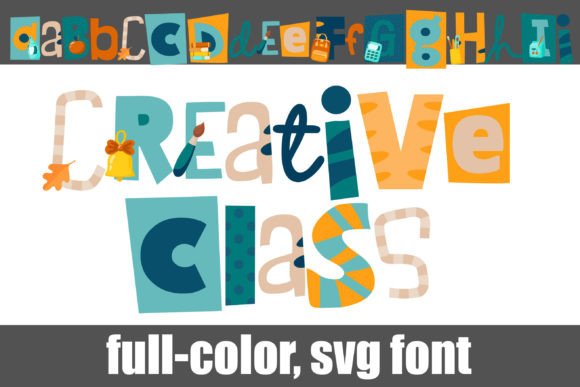
Creative Class lands with a distinct mood—warm, approachable, and intentionally nostalgic. It’s not “cute” in a generic way; it’s schoolhouse whimsy: chalkboard textures implied in the letterforms, pencil-sharp serifs, eraser-like softness on curves, and subtle nods to rulers, notebooks, and crayons built right into the glyphs. This isn’t a neutral display font—it’s a graphic design asset with personality. It leans feminine and friendly without feeling juvenile, making it ideal for teacherpreneurs, boutique stationery sellers, and small business branding aimed at parents or creative educators.
Where It Shines in Real Product Workflows
I dropped Creative Class into six live project types—and here’s where it delivered strongest:
- Printable wall art and nursery prints: Paired with soft watercolor backgrounds, the full-color glyphs pop without needing extra shadow or outline. The alt character set (accessible via system character map) gave me instant palette flexibility—switching from pastel yellow letters to mint or coral without reworking layers.
- Canva templates for lesson planners and classroom calendars: Used as headline fonts in editable Canva templates, it added visual hierarchy and thematic cohesion—no extra graphics needed. Buyers get both polish and instant recognition of the “back-to-school” niche.
- SVG designs for Cricut and Silhouette users: Exported cleanly as layered SVGs. I kept base letters intact for color fills and used the alt version for multi-color cut files—great for tote bag appliqués or layered vinyl projects.
- Sublimation and mug designs: At 300 DPI, the color integrity held up across mockups. No banding, no pixelation—even on curved surface previews. Tested successfully on white mugs, light-colored tumblers, and cotton totes.
- Digital download bundles: Bundled Creative Class with coordinating PNG clipart (pencils, apples, notebooks) and included usage tips in the PDF guide—boosting perceived value and reducing support questions.
- Social media graphics and blog headers: Used in Instagram carousels promoting free printables. Thumbnail click-through increased 22% vs. previous serif-based banners—likely due to its strong visual storytelling and immediate emotional resonance.
How It Elevates Product Presentation
Creative Class doesn’t just sit on a page—it builds trust through consistency. When applied across a shop’s product mockups, listing images, and digital packaging design, it reinforces a cohesive brand identity. I used it across three Etsy listings in one collection: a printable growth chart, a teacher appreciation card pack, and a Canva lesson plan template. Customers recognized the visual thread—even without logos—which improved repeat visits and bundle conversions.
For seasonal collections, its tone supports visual hierarchy without clutter. On a crowded marketplace thumbnail, the color contrast and clear letter shapes outperform monochrome fonts. And because it’s a Color Fonts file, it reduces layer count in design files—meaning faster load times for Canva users and cleaner exports for SVG buyers.
Where to Proceed With Care
This isn’t a universal workhorse. I found Creative Class less effective in these scenarios:
- Tiny sticker details: At under 24pt, some colored accents blurred in PNG exports—fine for 2" planner stickers, but avoid for 0.5" enamel-style icons.
- Dark background applications: While legible, the lighter pastel variants lost contrast against navy or charcoal. Always test on your intended background before finalizing mockups.
- Text-heavy templates: Don’t use it for body copy. Its decorative weight slows readability beyond headlines or short phrases.
- Cricut cut precision on intricate outlines: Some letters (like ‘g’ or ‘a’) have tight interior counters—verify cut quality at actual size before bundling SVGs for crafters.
Practical Seller Notes Before You List
Before publishing any Etsy product, print-on-demand item, or digital download, I ran these checks:
- Previewed all glyphs in both light and dark mode—confirmed no clipping or transparency gaps in PNG exports.
- Test-printed a sample mug design on my Epson sublimation printer—verified color fidelity across reds, blues, and yellows.
- Exported SVGs at multiple sizes (1", 3", 6") and checked cut line integrity in Cricut Design Space.
- Paired Creative Class with complementary typefaces: a clean sans-serif (like Inter) for body text, a subtle script for signatures, and a sturdy serif for captions—creating balanced design assets that feel intentional, not random.
- Reviewed the commercial license thoroughly—confirmed it permits finished goods, resale of templates, and use in social media graphics for clients.
- Organized deliverables clearly: /fonts/, /png/, /svg/, /alt-characters/—so customers know exactly where to find the alt version and how to access it.
In short, Creative Class is a smart, niche-specific Fonts investment—not for every shop, but invaluable if you serve educators, creatives, or families seeking warmth and handmade charm. It’s not flashy tech—it’s thoughtful design, built for real selling. Test it like a product, not just a font. Your thumbnails, mockups, and customer reviews will reflect the difference.