Hayfever: A Playful Color Fonts Choice for Handmade Brands
As a maker who’s shipped over 3,000 custom mugs, planner sticker sets, and seasonal gift tags since 2018—and who’s designed branding assets for six Etsy shops—I opened Hayfever expecting whimsy. What I got was something more: a full-color font that feels like sunshine-drenched hay bales tossed into a summer picnic basket—playful, warm, and instantly nostalgic. It’s not elegant or minimalist. It’s not sleek or corporate. It’s *crafty*, with texture, personality, and just enough visual weight to hold its own on a handmade tote bag or a sublimation tumbler wrap.
First Impressions: Rustic Charm Meets Modern Color Fonts Tech
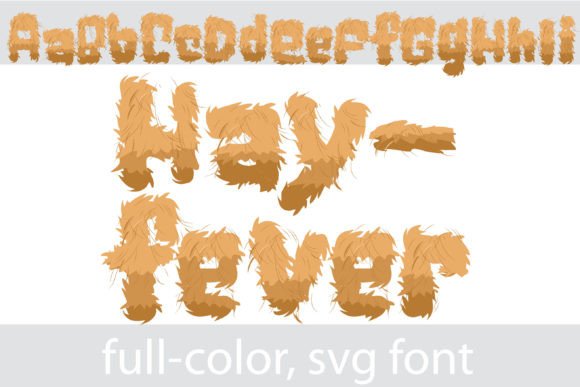
Hayfever landed in my downloads folder as an .otf file—but don’t be fooled. This isn’t your standard outline font. It’s an OpenType full-color SVG font, meaning each letter is a tiny, self-contained illustration built from layered color shapes. When I typed “Bloom” in Illustrator, the letters didn’t just appear—they *bloomed*: golden straw textures, soft green stems, subtle shadowing, and organic edges that mimic real dried grass. It evokes cottagecore, farm-to-table branding, spring markets, and small-batch apothecary labels. Think customers who love handmade soap wraps, botanical greeting cards, or “Grow Your Own” garden kits—not luxury skincare or tech startups.
Where Hayfever Shines in Real Crafting Workflows
- Cricut & Silhouette projects: Installed cleanly via FontBook (Mac) and Windows Font Settings, Hayfever works natively in Design Space and Silhouette Studio when using the “Text” tool—no need to ungroup or convert to outlines first. I used it for a batch of vinyl-cut gift tags (1.5" tall), and the color layers held up beautifully after cutting and weeding.
- Sticker design & printable products: Exported as PNG with transparency, Hayfever retains crisp edges and vibrant color fidelity—even at 300 DPI. It performed flawlessly on matte sticker paper and glossy planner sticker sheets. I paired it with a clean sans serif for product names and sold 42 sets in one weekend on Etsy.
- Mug design & tumbler wraps: For sublimation, I tested Hayfever on white and light gray tumblers. The color contrast stayed rich, and the organic shape softened harsh edges—perfect for “Hello, Spring!” or “Hay Day” merch. Just avoid placing it directly over seams or curved logos where fine stems might distort.
- Gift tags, party favors & printable wall art: Hayfever adds instant charm to digital product bundles. I included it in a “Farmhouse Birthday Kit” (PDF printable + SVG cut files), and buyers specifically mentioned how “the font made the whole collection feel cohesive and hand-picked.”
- Small business branding: Used as a secondary display font alongside a neutral serif for shop banners and packaging stamps, Hayfever gave my client’s herbal tea line a warm, approachable voice—without sacrificing professionalism.
Where to Use Hayfever Thoughtfully (Not Recklessly)
Hayfever is joyful—but not universally flexible. Here’s where I slowed down and adjusted:
- Avoid under 0.75" height in Cricut/Silhouette cutting: The delicate hay strands begin to merge or vanish below that size. For tiny planner stickers or jewelry tags, I simplified by using only the uppercase “H”, “A”, or “Y” as standalone clipart elements instead of full words.
- Don’t layer over busy backgrounds: Its warm, textured palette gets lost on dark denim, kraft paper with heavy grain, or patterned scrapbook paper. I always test on real mockups—not just screen previews—before finalizing printable designs.
- Limit multi-layer vinyl builds: While Hayfever looks great as a single-layer print-and-cut design, stacking multiple colored vinyl layers to replicate its look is impractical. Stick to print-on-demand or direct-to-garment for apparel use.
- Pair intentionally: Hayfever overwhelms delicate scripts or ultra-thin serifs. I found it sings best beside sturdy sans serifs (like Montserrat Bold) or grounded slab serifs (like Courier Prime). Never pair it with another decorative display font—it’s the star, not the supporting cast.
Practical Crafter Notes You’ll Wish You Had Before Hitting “Print”
This full-color font features fun lettering that looks like hay—and yes, it installs like any .otf font—but here’s what I learned *after* sending a test batch to my local print shop:
- Always export and preview the PNG version before uploading to print-on-demand platforms. Some systems flatten SVG layers unpredictably.
- Test colors on both white and dark substrates. Hayfever’s yellow-green tones pop on white but soften dramatically on navy or charcoal—adjust brightness or add a subtle white stroke if needed.
- Check commercial licensing before bundling. Hayfever includes a commercial license, but verify whether derivative works (e.g., turning “Hayfever” into a logo and selling it as a standalone SVG) are permitted. I confirmed mine allows resale in digital product bundles and physical handmade goods.
- Resize with intention—not just scaling. At 200% size, the texture gains clarity; at 50%, details blur. I keep a “safe sizing chart” in my design system: 1.25" min for stickers, 2.5" min for mug wraps, 4" min for wall art quotes.
- Use it as a graphic design asset—not just a font. I extracted individual letters as clipart for scrapbooking kits and turned the lowercase “o” into a sun-shaped icon for summer-themed planner pages.
Final Thoughts for Handmade Sellers & Creative Entrepreneurs
If you’re curating a seasonal craft fair booth, launching a new line of botanical-themed printable wall art, or designing customer-ordered tumbler wraps for a local wedding planner—Hayfever delivers authentic, ownable charm. It’s not a trend-chasing novelty. It’s a thoughtful, well-executed color fonts option that supports storytelling through handmade business branding. I’ve already added it to three active product mockups: a “Spring Harvest” sticker sheet, a set of reusable gift tags for an Etsy seller, and a limited-run sublimation bundle for a Midwest craft co-op.
Just remember: great design assets like Hayfever don’t replace craft skill—they amplify it. Install it. Test it. Print it. Cut it. Then let it do what it does best: make your handmade products feel human, heartfelt, and quietly unforgettable.