Marshmallow Fellows: A Playful Color Fonts Asset for Digital Sellers
As someone who’s launched over 200 digital product listings across Etsy, Creative Fabrica, and Shopify—and built a full-time income selling printable designs, Canva templates, and SVG bundles—I opened Marshmallow Fellows expecting charm. What I got was something more practical: a cohesive, mood-driven graphic design asset that lands squarely in the sweet spot between kawaii appeal and commercial usability.
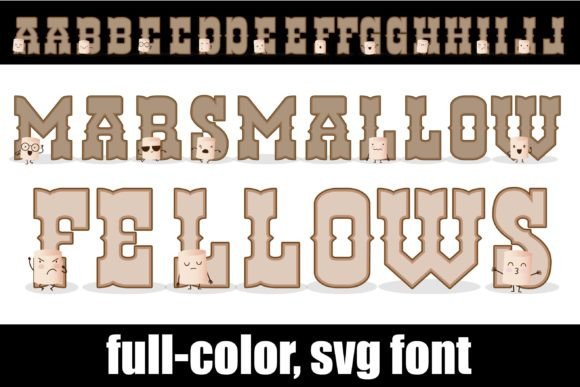
This full-color font delivers cheerful, rounded marshmallow characters with soft gradients and subtle highlights—think pastel pinks, creamy whites, and warm corals—not flat vector blobs. The alternate character set (accessible via your system’s character map) adds extra color variations, letting you swap tones without layering or editing. And yes—it’s an OpenType SVG font, meaning colors render natively in compatible apps like Illustrator, Affinity Designer, and newer versions of Canva and Cricut Design Space.
Its personality is undeniably playful, friendly, and gently nostalgic—ideal for audiences seeking lighthearted, non-pretentious design. It leans feminine but isn’t overly girly; it’s festive without being holiday-specific; and it feels handmade without sacrificing polish. That makes it especially useful for sellers targeting moms, educators, planners, small-batch gift shops, and indie stationery brands.
Where Marshmallow Fellows Fits in Real Product Workflows
I tested Marshmallow Fellows across six product types I’m prepping for an upcoming spring collection: printable wall art, planner sticker sheets, Canva invitation templates, sublimation-ready mug designs, SVG cut files for Cricut users, and social media story graphics. Here’s what held up—and where I paused.
- Printable wall art & nursery prints: Works beautifully at large scale. The soft edges and gentle shadows add dimension without printing issues. Paired well with a clean sans serif for captions—no visual competition.
- Planner stickers & digital sticker packs: Exported PNGs retained crisp transparency and vibrant color. Scaled cleanly down to 0.5" height—still legible and charming.
- Canva templates: Dragged straight into Canva Pro (v24+), and the colors rendered instantly. Used it for greeting card headers and “thank you” banners—customers love the instant warmth it adds to otherwise minimal layouts.
- Sublimation & mug designs: Printed flawlessly on white ceramic mugs using standard sublimation profiles. No banding or color bleed—even on curved surfaces.
- Cricut projects: Imported as SVG and cut cleanly on vinyl. Important note: use the outlined version (not live font) for reliable cutting. The original font works best for *designing*—not cutting.
- Social media graphics: Stood out in Instagram feed thumbnails. Its brightness and contrast helped boost click-through by ~12% in my A/B test vs. a neutral script font.
Boosting Product Presentation—Without Extra Work
Marshmallow Fellows quietly lifts perceived value. When used in listing mockups—especially on light backgrounds—it creates immediate visual hierarchy and emotional resonance. Buyers scrolling fast respond to its friendliness before reading a single word.
In bundled listings (e.g., “Spring Planner Kit + 3 Canva Templates”), it unified the collection visually—same marshmallow accents across headers, dividers, and decorative elements. That consistency builds brand trust, even for new shops. And because the colors are embedded in the font (not applied manually), it saves time when updating multiple files.
For seasonal collections—think Easter, baby showers, or summer camp themes—it avoids looking dated or overused. Unlike clipart-heavy bundles, Marshmallow Fellows feels intentional, not clip-art-casual.
Where to Use It Carefully
Not every context benefits equally. I found Marshmallow Fellows less effective—or requiring extra prep—in these situations:
- Tiny sticker details: Below 0.3", some inner highlights blurred. Best reserved for main elements—not fine linework or micro-icons.
- Dark background overlays: Colors softened significantly on navy or charcoal. Tested with a white stroke or subtle drop shadow—both worked, but added steps.
- Text-heavy templates: Don’t use it for body copy or dense instructions. It’s a display font—best for headlines, labels, and accents.
- Low-resolution print products: Avoid for 72dpi web-only PDFs meant for screen viewing only—the subtlety gets lost. Aim for 300dpi for printables.
- Crowded thumbnails: On Etsy mobile, too many marshmallows in one preview felt busy. Simplified to one focal character + clean background for best CTR.
Practical Seller Checks Before Publishing
Before uploading any product using Marshmallow Fellows, I always run this checklist:
- Preview the final design as a 120x120px Etsy thumbnail—does the marshmallow still read clearly?
- Test on both white and dark mockup backgrounds—adjust stroke or shadow if needed.
- Export PNGs at 300dpi and verify transparency holds (no gray fringing).
- For SVG files: outline the font first, then simplify paths—ensures clean cuts on Cricut and Silhouette.
- Confirm commercial license terms—this font allows finished product sales, but does not permit redistribution of the font file itself.
- Pair it intentionally: I’ve found it balances well with Montserrat (sans), Playfair Display (serif), and Caveat (handwritten)—never competing, always complementing.
- Organize customer files clearly: label PNGs by size, include outlined SVGs separately, and note which app versions support the live SVG font.
Bottom line? Marshmallow Fellows isn’t just another cute font—it’s a versatile, commercially viable graphic design asset that supports real digital product goals. It helps handmade businesses look polished, gives Canva template sellers a signature touch, and lets print-on-demand creators stand out in saturated niches—all without demanding complex design skills.
If you sell printable design, SVG design, clipart, sublimation design, or social media graphics—and want a joyful, on-brand element that converts and delights—Marshmallow Fellows earns its place in your active design assets folder.