Mishmash Merica: A Real-World Embroidery Font Review
First Impressions: Bold, Playful, and Unapologetically Patriotic
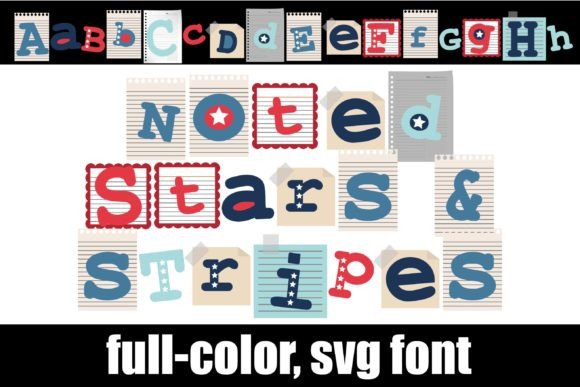
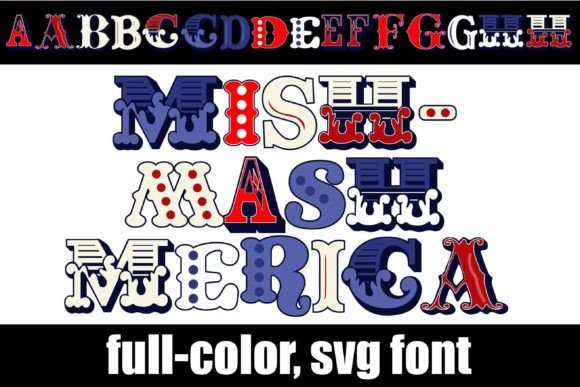
When I opened Mishmash Merica for the first time—prepping it for a custom embroidered tote bag destined for a Fourth of July farmers’ market stall—I felt that familiar spark of potential. It’s not a staid serif or a minimalist sans. This is a full-color font with deliberate visual chaos: chunky serifs next to bubbly script, tight condensed caps beside loose, hand-drawn lowercase, all anchored in red, white, and blue. The alt version (accessible via character map) adds subtle lavender, gold, or navy accents—but the core palette feels intentional, nostalgic, and instantly legible at a glance. It doesn’t whisper “USA.” It waves a tiny flag while grinning.
Where It Shines: Projects That Need Personality & Punch
Mishmash Merica isn’t built for corporate logos or wedding monograms. It thrives where handmade charm matters most: on cotton canvas tote bags with grommeted handles, oversized sweatshirts for local band merch, baby onesies with a single “USA” across the chest, or tea towels sold at a boutique gift shop. I tested it on a medium-weight denim apron—and the contrast between the rugged fabric and the lively font created real visual warmth. It also worked beautifully as a centered phrase on a linen pillow cover (“Home Is Where the Merica Is”), especially when stitched with matte cotton thread instead of glossy polyester.
For Etsy sellers and small shop owners, this font delivers instant thematic clarity. Customers scrolling past your listing instantly grasp the vibe—no description needed. That’s valuable real estate in a crowded digital marketplace. And because it reads clearly even at 2.5 inches tall, it scales well for both patches and cap fronts—though more on that limitation in a moment.
Where to Proceed With Care
Let’s be direct: Mishmash Merica is not a one-size-fits-all embroidery file. Its charm lives in its variation—and that variation demands attention during execution. On thin or stretchy fabrics like lightweight knits or baby rib, the mix of thick outlines and delicate interior details can blur if stabilizer isn’t precisely matched. I saw minor distortion on a 100% cotton jersey tee until I switched from tear-away to cut-away + topping.
Curved surfaces—like the front panel of a structured baseball cap—require extra planning. Some letterforms (especially the swashy “A” and looping “R”) have tight interior angles that may not translate cleanly without manual digitizing tweaks. Likewise, dense fill areas (like the solid blue “M”) can create stiffness on soft fabrics like flannel or fleece. If you’re stitching Mishmash Merica onto a quilted blanket or nursery mobile, consider simplifying the color layers or using satin stitch outlines only.
And here’s something practical many overlook: Mishmash Merica’s color layering means thread color choice isn’t optional—it’s structural. Using off-brand red thread that leans orange? The whole patriotic balance shifts. Same goes for white thread on dark fabric: unless you’re using high-contrast white or a white underlay, readability drops fast.
What Your Customers Actually Notice
Embroidery buyers don’t read spec sheets—they feel texture, notice alignment, and respond emotionally to tone. Mishmash Merica reads as joyful, confident, and human-made. That builds trust faster than a perfectly aligned but sterile font ever could. When used thoughtfully on a personalized gift—say, a child’s backpack with their name in Mishmash Merica plus a star motif—the design feels celebratory, not generic. That emotional resonance directly lifts perceived value, especially in markets where handmade presentation justifies premium pricing.
That said, brand consistency matters. If your shop sells minimalist linen goods, slapping Mishmash Merica on every label will confuse shoppers. But if your aesthetic leans into folk art, vintage Americana, or playful patriotism? Then this font becomes a cohesive design asset—not just decoration, but part of your visual language.
Practical Designer Notes Before You Stitch
- Always test on scrap fabric first—especially with layered colors. Watch how red over white behaves vs. blue over red.
- Check thread color contrast on both light and dark backgrounds. Don’t assume “white thread = safe” on heather grey or navy.
- Review stitch density. Some letters use heavier fill stitches; reduce density slightly if embroidering on delicate or heat-sensitive fabrics.
- Confirm hoop size compatibility. While Mishmash Merica works well at 3–4 inches wide, smaller hoops (<2.5") may crop critical details—especially in the alt version’s extended glyphs.
- Inspect small corners and interior loops manually in your embroidery software. Tiny gaps or overlapping stitches won’t show on screen but will snag thread mid-run.
- Test black-and-white mockups before finalizing client approvals. Not all buyers realize how much color drives Mishmash Merica’s impact.
- Use proper stabilizer: medium-weight cut-away for knits, tear-away + topping for woven cottons, and water-soluble for textured surfaces like terry cloth.
- Verify licensing before selling finished products or digital embroidery files. Mishmash Merica is a Color Fonts release—check whether commercial use, resale of stitched items, or redistribution of the font file itself is permitted.
Final Thought: A Font With Intent, Not Just Ink
Mishmash Merica doesn’t try to be everything. It’s not elegant. It’s not neutral. It’s not subtle. And that’s exactly why it works so well for real embroidery projects—because authenticity reads louder than perfection in handmade spaces. Whether you’re an Etsy seller building seasonal collections, a craft fair vendor curating holiday gifts, or a small-batch apparel decorator designing custom sweatshirt runs, this font brings energy, clarity, and unmistakable voice.
Just remember: great embroidery isn’t about dropping in a design and hitting start. It’s about reading the fabric, honoring the thread, and matching intention to outcome. Mishmash Merica rewards that care—and gives back personality, recognition, and genuine connection in return.