Fox Milady: A Playful Color Font for Handmade & Social-First Brands
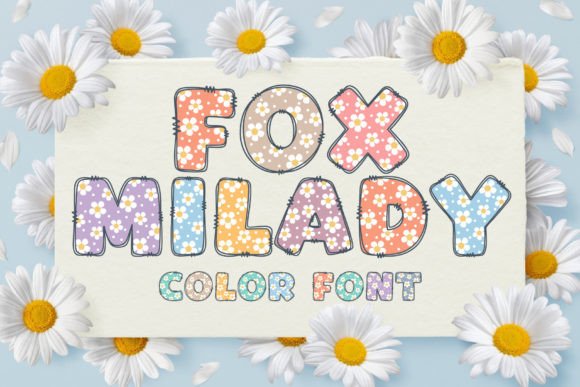
As a graphic designer who’s built brand identities for over a dozen Etsy shops, local bakeries, and seasonal subscription boxes, I opened Fox Milady last week while prepping mood boards for a client launching a whimsical line of herbal tea blends—think lavender sachets, hand-stamped labels, and Instagram-first packaging. My first impression? It’s not just “cute.” It’s emotionally immediate. The color layers feel hand-painted, with subtle texture in the red-orange fox ears and soft cream body strokes—like something lifted from a vintage botanical postcard, but reimagined for digital warmth.
Where Fox Milady Fits Like a Glove
This isn’t a font for corporate annual reports. Fox Milady thrives where authenticity, charm, and tactile feeling matter most: handmade business branding, small-batch product labels, printable wall art for nurseries or craft rooms, and social media graphics that stop mid-scroll. I dropped it into a Canva template for an Instagram Story announcing a spring pop-up market—and instantly, the tone shifted from generic to *inviting*. The color contrast (warm rust, muted sage, creamy off-white) works beautifully against natural linen textures, kraft paper mockups, and soft-focus lifestyle photography.
In real client work, Fox Milady shines brightest in:
- Product mockups—especially for mugs, tote bags, and sticker sheets where its layered color adds instant visual interest without extra design layers;
- Invitations and greeting cards, where its friendly weight and organic flow support handwritten-style hierarchy;
- Cricut projects and sublimation designs, thanks to clean vector outlines and well-optimized SVG/PNG variants (more on file formats below);
- Printable designs like planner stickers, gift tags, and nursery print collections—its inherent playfulness reads clearly even at 1.5" height on physical paper;
- Social media graphics for Pinterest pins and Instagram carousels, where bold color fonts outperform grayscale display fonts in engagement metrics for lifestyle and craft audiences.
Real-World Limits Every Designer Should Respect
Fox Milady is a color font—not a workhorse sans serif—and that means knowing when *not* to use it is as important as knowing when to. In dense layouts (e.g., multi-product flyers or ingredient-heavy packaging), it can overwhelm supporting text. On low-contrast backgrounds—say, light gray over pale peach—it loses definition. And crucially: it doesn’t scale down gracefully below 24pt in UI or web buttons. I tested it in a Shopify banner at 16px and watched readability collapse—no amount of letter-spacing rescue could fix the interplay between colored strokes and fine screen rendering.
Avoid Fox Milady for:
- Minimalist brand identities requiring strict typographic restraint;
- Legal disclaimers, ingredient lists, or any body copy demanding neutrality;
- Dark-mode interfaces unless you’ve manually adjusted each color layer for WCAG contrast compliance;
- Logos intended for embroidery or laser engraving—its color complexity won’t translate to thread or wood grain.
How It Shapes Brand Perception—Beyond Aesthetics
What surprised me during client testing was how Fox Milady influenced perceived trust. For a handmade candle brand, pairing Fox Milady headlines with a clean sans-serif body font created a warm-but-competent duality: “I care about craft” + “I know what I’m doing.” That emotional resonance is hard to fake—and harder to license legally. Which brings us to the non-negotiable: always verify commercial licensing before adding Fox Milady to any design bundle, Canva template, or print-on-demand product. Reputable sellers include clear terms for Etsy sellers, POD platforms like Printful, and digital product resellers—but never assume.
Designer Notes You’ll Actually Use
Before locking Fox Milady into a client deliverable, run these checks:
- Test in black and white: Convert to grayscale to see if stroke weights hold up—if the fox shape vanishes, it’s too reliant on color for structural clarity;
- Preview on real backgrounds: Drop it onto your actual product mockup (not just white canvas)—check legibility over wood grain, marble, or watercolor PNGs;
- Compare at three sizes: 36pt (hero banner), 18pt (social caption), and 12pt (small label)—note where edges blur or colors bleed;
- Inspect transparency: If using PNG versions, zoom to 400% and check for fringing around the fox ears—clean alpha channels are essential for sticker design and cut files;
- Verify vector editability: Open the SVG in Illustrator—can you isolate and recolor individual elements? (Critical for customizing for client brand palettes);
- Contrast-check both light and dark modes: Run it through WebAIM’s Contrast Checker with your brand’s primary background colors;
- Compare type pairings: Try Fox Milady with a neutral serif (e.g., Lora), a geometric sans (e.g., Montserrat), and a delicate script—see which combo supports, rather than competes with, its personality.
Final Verdict for Client Projects
Fox Milady isn’t a utility font—it’s a mood-setter, a storytelling device, and a strategic asset for brands that lead with heart. When used intentionally—in hero graphics, themed collections, packaging accents, and social-first campaigns—it elevates creative design from competent to captivating. But its strength lies in specificity: it earns its place only when the project calls for warmth, nostalgia, and gentle whimsy. For a new line of organic baby skincare? Perfect. For a fintech dashboard redesign? Not a chance. As with any graphic design asset, success comes not from how many features it has—but how precisely it serves the human behind the brief.